How Often Should You Replace Your Golf Clubs?

Golf equipment manufacturers release new clubs every year, often promising more distance, forgiveness, consistency or improved feel.
But does that mean you actually need to replace your golf clubs every few years? Not necessarily.
A well-maintained golf club can remain perfectly usable for many years. Rather than replacing clubs simply because they're getting older, it makes more sense to consider their condition, performance and whether they still suit the role they're supposed to perform in your bag.
Some clubs also wear considerably faster than others.

Here's what to look for.
How Long Do Golf Clubs Last?
There isn't a universal lifespan for a golf club.
A golfer playing several times a week and practising regularly will put considerably more wear on equipment than someone playing once or twice a month.
The type of club matters too.
A putter could potentially remain in a golfer's bag for decades, while a heavily used wedge may show meaningful face and groove wear much sooner.
The USGA's equipment rules specifically recognise that club faces, grooves and grips can become worn through normal use.
Rather than looking at age alone, look at the individual club.
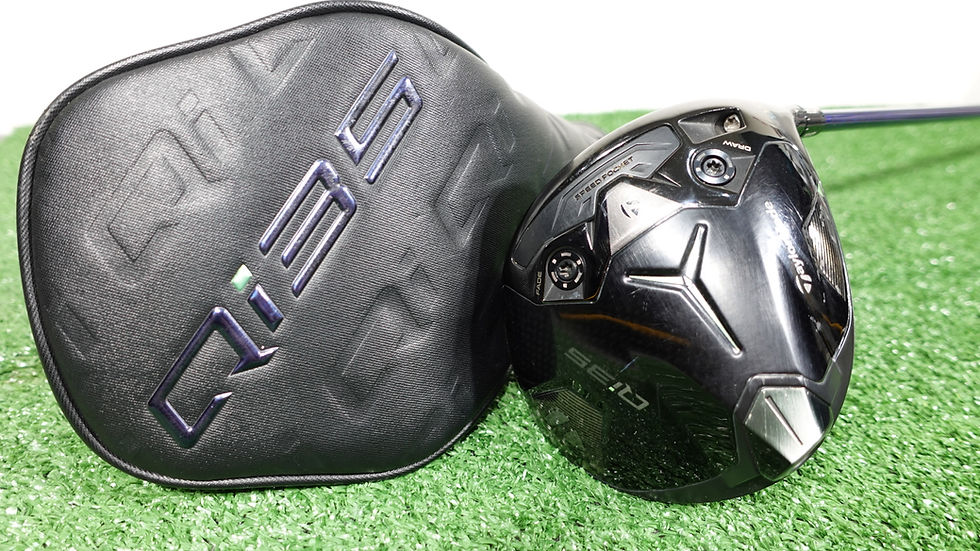
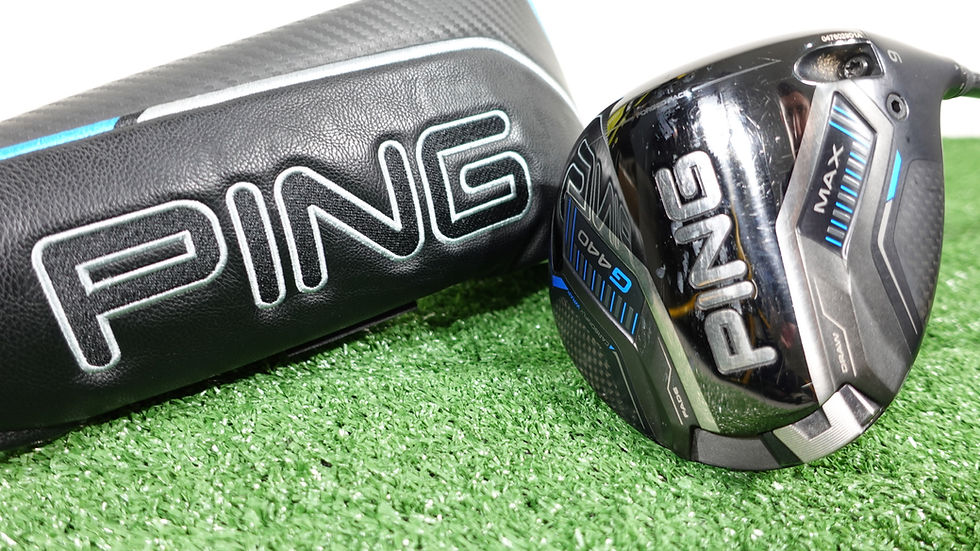
When Should You Replace Your Driver?
Drivers don't generally need replacing simply because they're a few years old.
If your driver is structurally sound and you're happy with its performance, there's no automatic reason to change it when a newer model is released.
There are, however, reasons you might consider changing.
Visible damage to the head or face obviously deserves attention. A worn or damaged shaft or grip may also need replacing — although replacing those components doesn't necessarily mean replacing the entire club.
You may also find that another driver provides a combination of launch, spin, forgiveness or ball flight that works better for you.
That's different from saying that an old driver has suddenly become obsolete.
A driver doesn't have an expiry date.
And for golfers shopping on a budget, that is one of the attractions of the pre-owned market.
Previous-generation premium drivers can offer an opportunity to buy quality equipment without paying current-model prices.
What About Fairway Woods and Hybrids?
The same general principle applies.
There's no fixed number of years after which a fairway wood or hybrid needs replacing.
Instead, ask yourself: Does it still perform the job I carry it for?
If your fairway wood consistently gives you the distance and ball flight you want, there may be little reason to change.
On the other hand, your bag may have changed around it.
Perhaps you've added a new driver that travels further. Maybe you've replaced your irons and your longest iron now overlaps with your hybrid. Or perhaps you've discovered that a higher-lofted fairway wood gives you a more useful option.
In those situations, replacement may be about improving the distance gaps within the bag, rather than the age of the club.
If you're currently thinking about your fairway-wood setup, we've also covered the differences between 3-woods and 5-woods in our latest guide.
How Often Should You Replace Your Irons?
This is where golfers can easily be persuaded that their equipment is "too old".
A quality set of irons can potentially remain in use for many years.
Normal cosmetic wear doesn't automatically mean an iron needs replacing. Marks, scratches and bag chatter are expected on clubs that have been played.
What matters more is the condition of the faces, grooves, shafts and grips, and whether the irons continue to perform as expected.
If you've played the same irons heavily for years, examine the areas of the face where you regularly strike the ball.
Grooves can gradually wear through normal use. The Rules of Golf even specifically account for clubs whose grooves have become worn over time.
That doesn't mean you should replace an iron set at the first sign of wear.
But heavily worn faces, damaged components or a significant change in your requirements can all provide legitimate reasons to consider something different.
Wedges Are Different
If there's one part of the bag where wear deserves particular attention, it's the wedges.
Wedges regularly interact with turf and sand, and many golfers also practise with them extensively.
Over time, the groove edges can wear.
Why does that matter?
Because groove condition can influence the amount and consistency of spin you can generate, particularly when conditions make maintaining clean contact more difficult. Titleist's testing found progressively reduced spin and increased rollout as wedge grooves accumulated substantial use.
Titleist recommends evaluating wedge groove condition at around 75 rounds, although that should be treated as an inspection point rather than a universal replacement deadline. How quickly a wedge wears depends heavily on how often it is played and practised with, the surfaces it's used from and the balls being hit.
Bunker practice can be particularly hard on wedge faces because repeated contact with sand contributes to groove wear.
So instead of saying:
“My wedge is two years old, therefore I need another one.”
A better question is:
“What condition is the face actually in?”

Don't Forget Your Grips
Sometimes the club isn't the problem at all. The grip is.
Grips gradually become worn through use. They can become smoother, firmer or simply less comfortable than when they were new.
The USGA specifically identifies grip wear as something that occurs through normal use.
If you still love a particular driver, iron set or wedge but the grips have seen better days, replacing the grips could be a considerably cheaper solution than replacing the clubs.
The same applies to certain shaft issues.
Before retiring an otherwise perfectly good club, consider whether the component causing the problem can simply be replaced.
How Long Can a Putter Last?
Potentially a very long time.
Putters aren't subjected to the same high-speed impacts and turf interaction as drivers, irons and wedges.
That's one reason golfers can continue using older putters for years — sometimes decades.
If you like the feel of your putter, aim it confidently and are happy with how you roll the ball, age alone isn't a compelling reason to replace it.
Of course, golfers change putters all the time.
Sometimes it's because they prefer a different head shape, alignment system, neck design, length or feel.
And sometimes it's simply because we're golfers and buying another putter seemed like a good idea at the time. We understand that one.

Does Newer Always Mean Better?
New golf equipment can absolutely offer technological improvements.
But newer doesn't automatically mean better for every golfer.
A newer driver that doesn't suit you isn't automatically an improvement over an older one that you hit consistently.
Likewise, replacing an iron set you love simply because it's several generations old may not produce the improvement you're expecting.
This is also why the pre-owned market can be so useful.
Golfers can access premium equipment from previous generations at prices below equivalent brand-new current models, and equipment doesn't suddenly stop working because its replacement has been released.
Signs It Might Be Time for a Change
Rather than setting a calendar reminder to replace your clubs, look for genuine reasons.
It may be worth considering a change if:
The club is damaged.
The face or grooves are significantly worn.
Your distance gaps no longer make sense.
Your requirements have changed.
You've lost confidence in a particular club.
Another club demonstrably performs the job better.
Repairing or replacing components no longer makes economic sense.
But if a club is still performing well and you're confident using it? There's nothing wrong with keeping it in the bag.
What Should You Do With the Clubs You Replace?
Replacing a club doesn't necessarily mean the old one needs to sit in the garage.
Quality used golf equipment retains value, particularly when it has been looked after.
Selling or trading your existing equipment can help offset the cost of changing your setup — and those clubs can go on to suit another golfer perfectly well.
At The Golf Club Exchange, we buy and sell quality pre-owned golf clubs from golfers across Australia.
If you've got clubs you're no longer using, you can submit their details through our online trade-in service for an obligation-free quote.
The Bottom Line
There is no universal replacement schedule for golf clubs.
Drivers, fairway woods, hybrids and irons can potentially remain useful for many years when they're in good condition and still performing the job required of them.
Wedges deserve closer attention because groove wear can affect spin and control, particularly with heavy use.
And putters?
If you've found one you love, you might never need to replace it.
Ultimately, don't replace a golf club because the calendar says it's old.
Replace it when its condition, performance or role in your bag gives you a genuine reason to change.


Comments